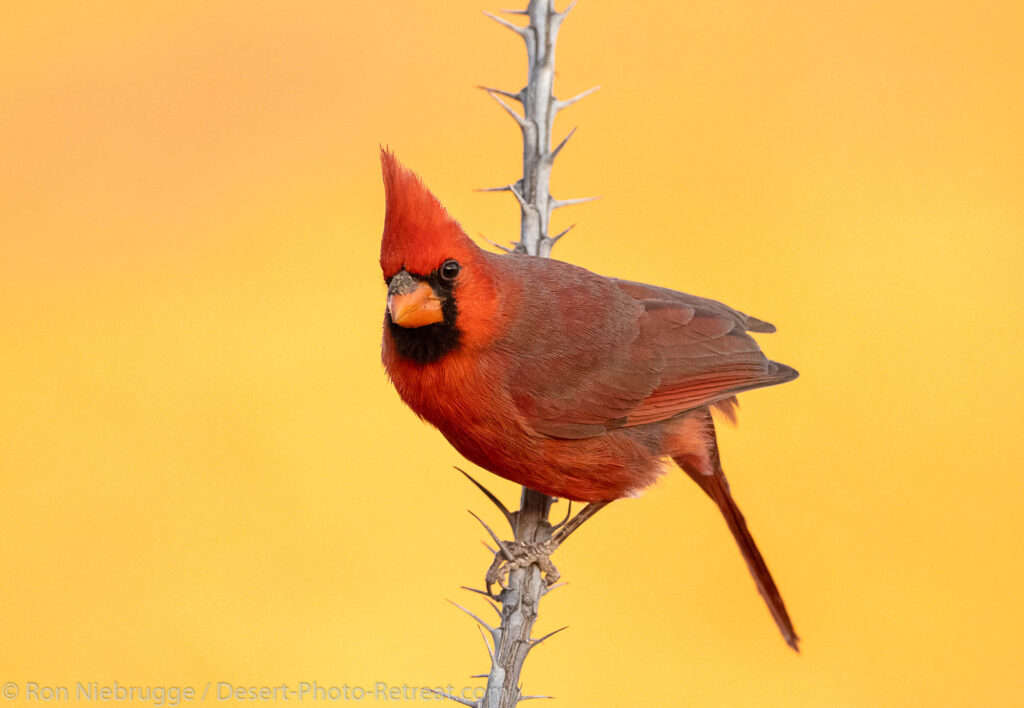
Another one from my quick session in the lower blind Saturday night at the Desert Photo Retreat.
Below you'll find a list of all posts that have been categorized as “Arizona”
Another one from my quick session in the lower blind Saturday night at the Desert Photo Retreat.

Made a quick trip to Arizona to check on our property and refill the auto water system, and to enjoy the 111 temp! Well the first part is true. These photos are all from last night. A fox pair, deer, coyote with a pup, great-horned owl and the javelina with two new babies!
Read More
I don’t typically share mistakes, but this is an interesting one. This was from later in the evening from my single bat image.
The way I do bat photography is with a Cognisys Sabre. I set the aperture and ISO, then put the camera in bulb mode and let the Sabre manage the shutter. I can tell the Sabre to take continues exposures for a set length of time. At the beginning of the night when there is some ambient light, I do back to back to back 3 or 4 second exposures. Later in the evening I switch to 30 second exposures. So the Sabre captures photo after photo until it senses a bat. Then it fires my flashes and closes the shutter. That way I don’t capture multiple images in the same frame.
So what happened here? Before going to bed, I always check on the setup, change out camera batteries etc. Well, I must have accidentally bumped off of bulb mode to 60 second manual exposure. In this mode, the Sabre keeps firing the flashes, but has no way of closing the shutter. So this is 4 or 5 separate flash firings which is why the rocks in the background are exposed, and 5 different bats! The bat activity really comes in flurries as you can see here.
I’m going to make some small changes to the setup next winter and looking forward to having everything fine-tuned and working great – lots of possibilities here! I have noticed that skunks and other animals will sometimes climb up on this giant water table at night which could provide some cool opportunities for back lighting from below and doing other creative things with the flashes.
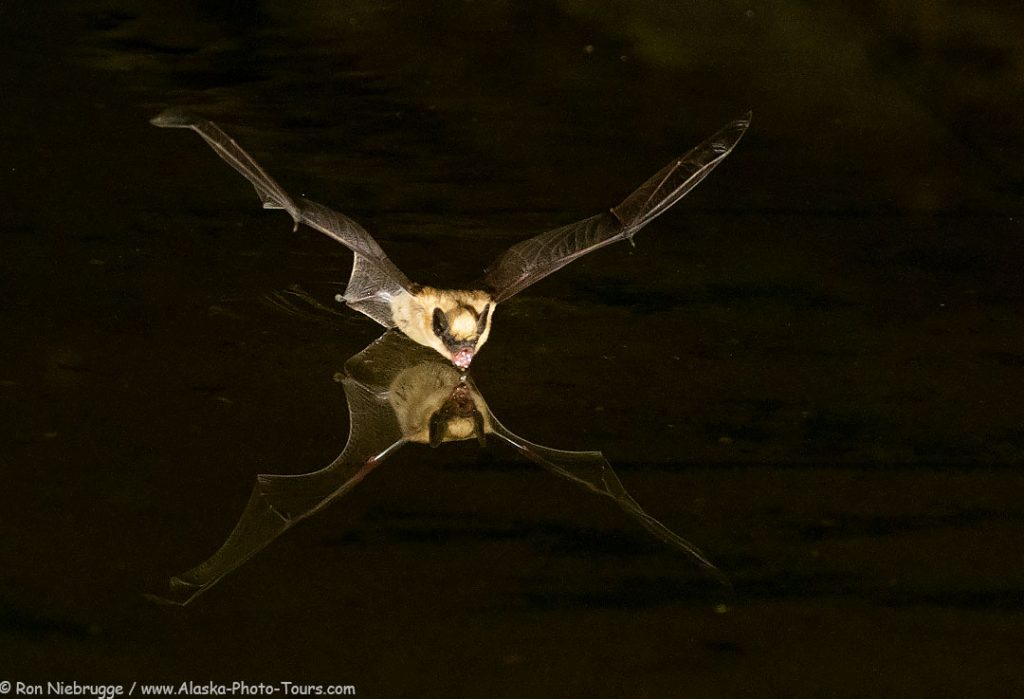
A thirsty bat last night at the reflection table blind!
I think I have all the bugs worked out. I’m using a Cognisys Sabre for a trigger and the place the camera on bulb. The Sabre actually managed my exposure time. I vary it from 3 seconds at twilight, to 30 seconds in the darkness like you see here. The Sabre then does exposure after exposure waiting for a bat. When a bat does break the beam of the Sabre, it fires my flashes and not the camera. This way I avoid the lag time associated with trigger the camera. Firing the flashes is almost instantaneous. The Sabre then stops the exposure, and begins another one so that I don’t get duplicate bats in the same frame so I can go to bed. 🙂
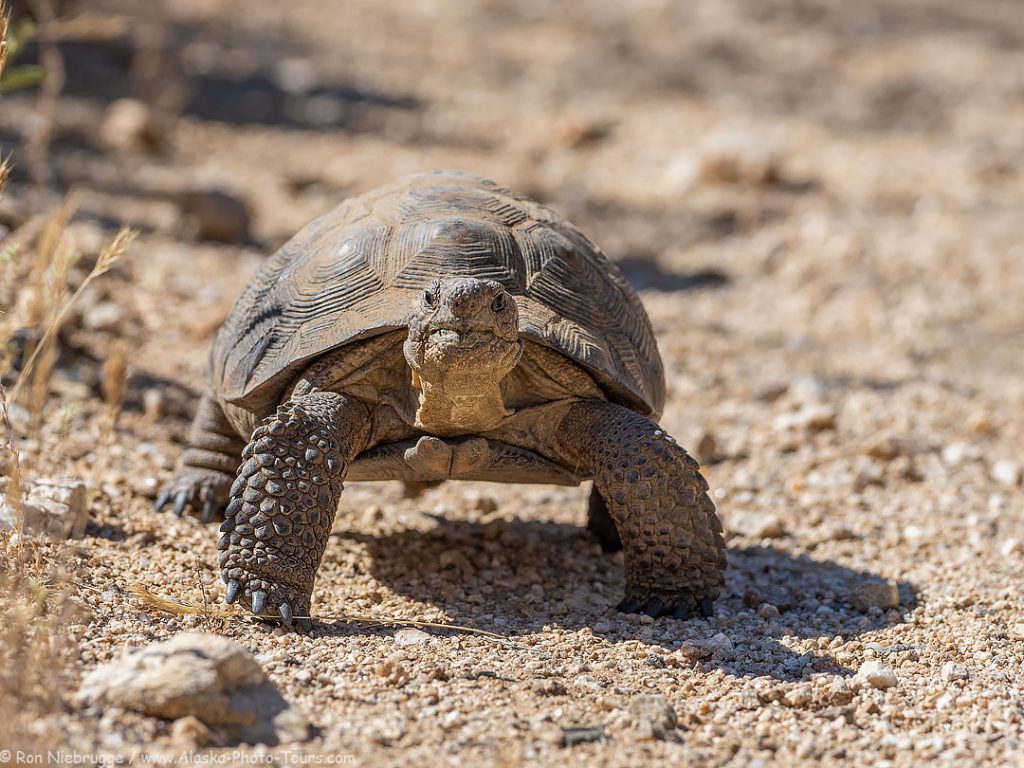
Desert tortoise just a few minutes ago. First one I have seen this season. Cactus, including the saguaros are starting to now bloom in earnest. Thanks to the cool spring, it seems like things are running about a week later as compared to the last couple of warm years. The cool weather is over now!
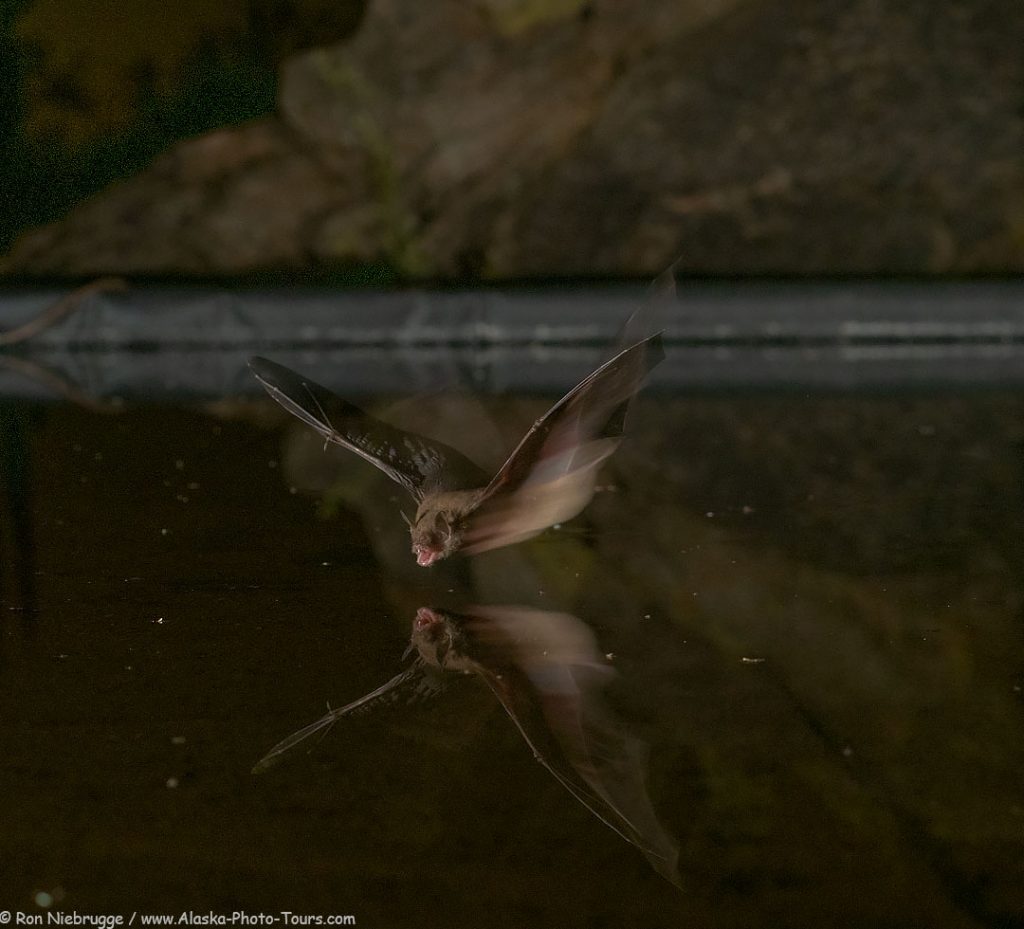
So close! I have been working on bat photography at my water table blind the last few nights. Couldn’t figure out why part of the animal was blurry, it should be tack sharp at 1/16 flash power. It was like the flashes weren’t syncing. Just discovered, I had the flash on the right in high speed sync mode, that would do it! Now I can’t wait to try again. And, to fix up the background edge.
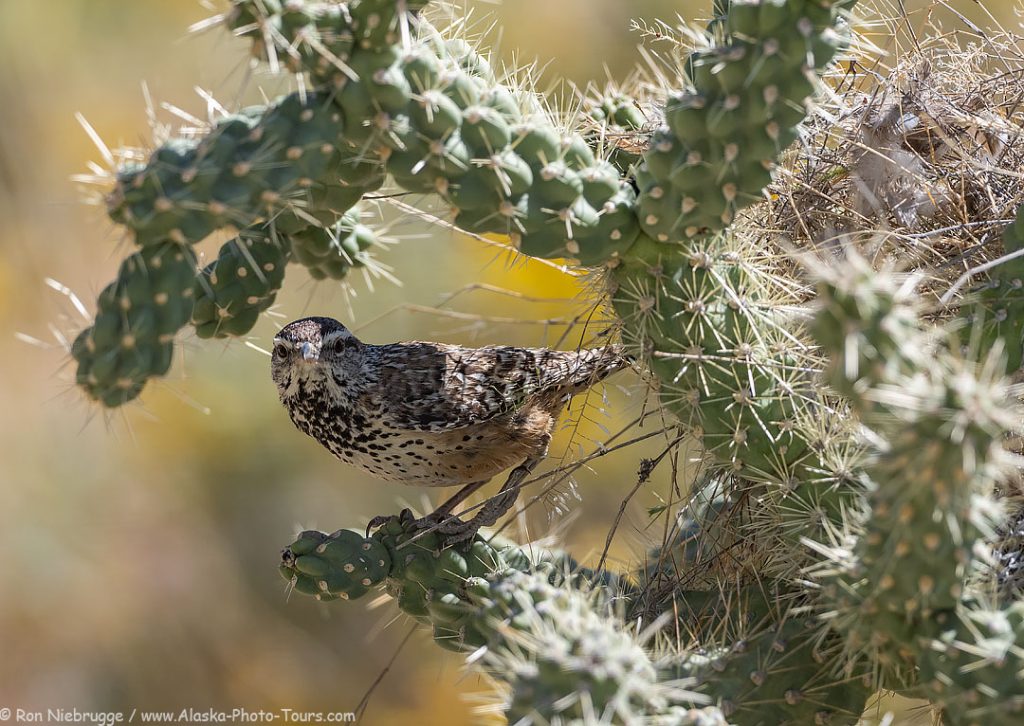
One of the fun things about spending almost 6 months each year camping on our remote piece of desert is being immersed in nature. Seeing all the changes that take place from week to week is fascinating, including this cactus wren pair.
Today, the cactus wren now have a giant, fully enclosed nest! However, I watched them in mid December placing some of the very first little sticks in the cholla. I captured these photos through the window as I was literally sitting at my desk. The adults would come and go, hopping around on the ground looking for the perfect stick. Once they found it, they would grab it and head straight to the nest with a real sense of purpose. It looked like a half-hazard mess at first, but as time went on, it turned out so nice!
Since we can’t see into the nest without disturbing them, we had no idea how they were doing until almost a month ago when we could hear the sounds of the babies inside. The chorus of sound would triple in volume every time one of the adults would return with a mouth full of bugs! It was hard to not smile watching this busy pair so diligently take care of their young.
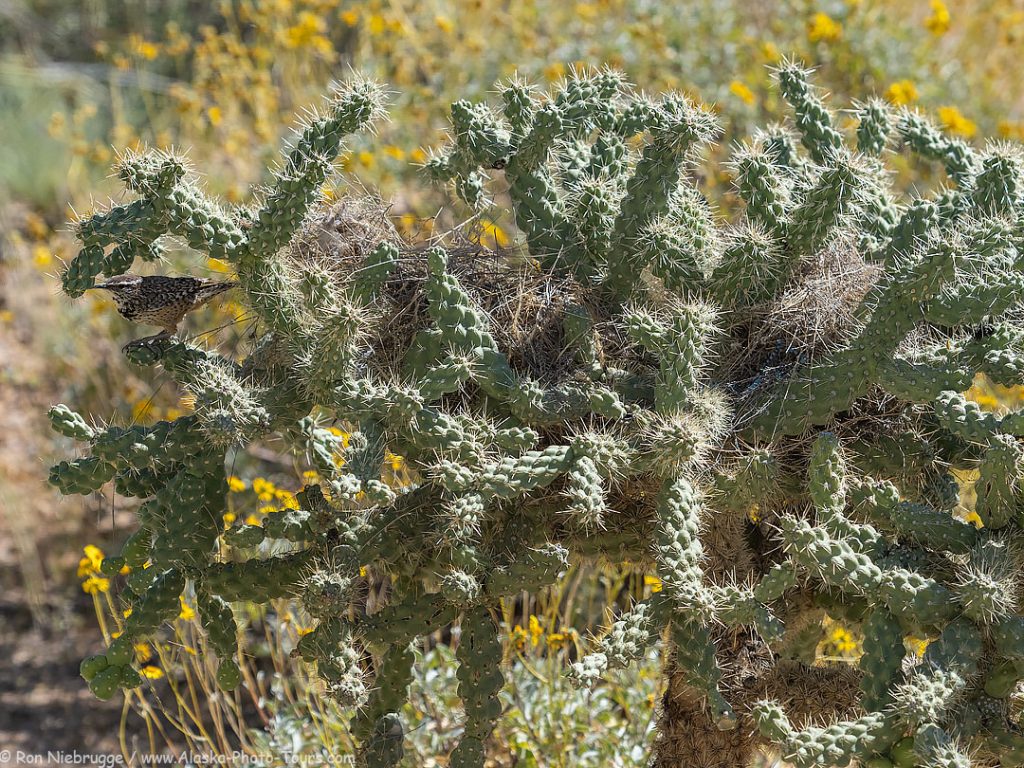
Unfortunately, I don’t know what happened to the off-spring, since I didn’t get to see them fledge. I’m choosing to believe some of the the wren we see hopping around here are offspring. That said, the adults are busy again expanding the nest even further. The second photo shows just how big it is, it must be more that two feet long! When I took these photos a couple of days ago, the adults were mainly bringing feathers and other soft material to the nest, possibly getting ready for a second brood. There are so many similar stories being played out right now. At least two gilded flicker pairs have nests in saguaros on the property, and possibly even more gila woodpeckers. Those chicks of both are really loud! We will be back in Alaska before many of these stories conclude, but will look forward to seeing them all again next winter when new stories will be told.


Recent Comments