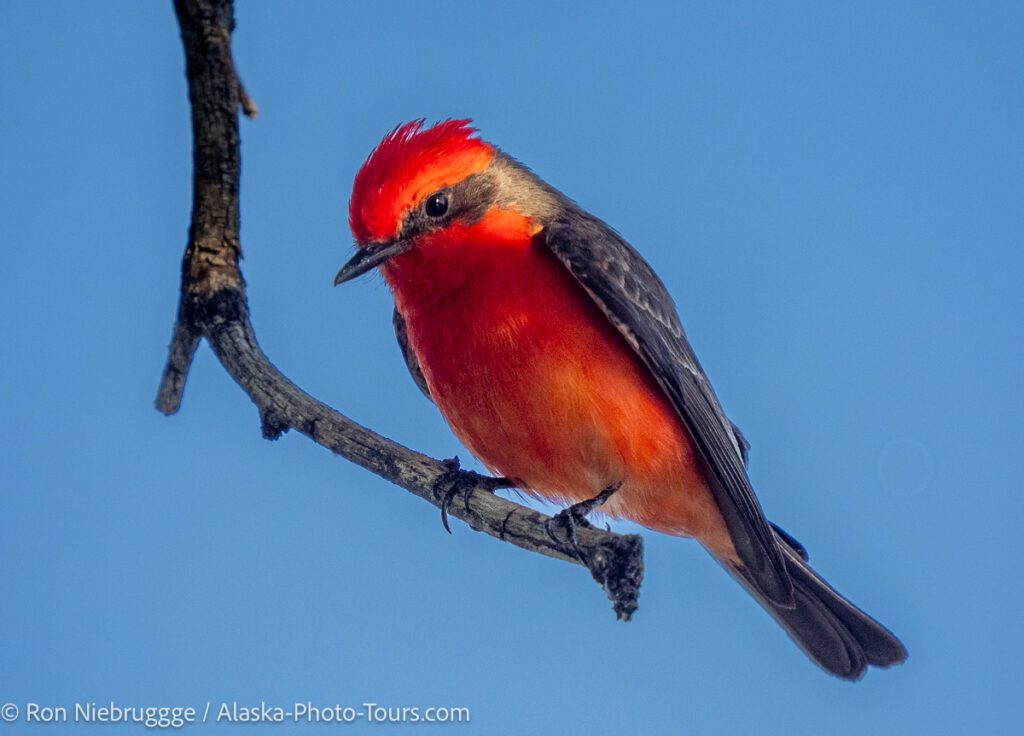
Our winter home has always had a fair number of Vermilion Flycatchers, however, this year there seems to be many more than normal! I fine with that as I find them to be very striking. The red is brighter than that of the Northern Cardinal – so bright!. This is a male who was bringing food to a nest with two chick in it.


Comments 44
Stunning — I’ve missed your posts. We miss seeing you.
That was me,
The Vermilion Flycatcher shots are stunning — that vibrant red against desert scrub is always a remarkable sight. Arizona’s winter birding is really underrated for migratory species from the northeast. Beautiful documentation of the Marana area.
The Vermilion Flycatcher photography from Marana is exceptional — the contrast between that vivid red plumage and the desert vegetation background is striking. Arizona’s winter birding is genuinely underrated for variety and photographic opportunity.
Thanks for the detailed take. I’ve found miso-one.com useful for the note-taking side of team meetings.
Useful breakdown. The concrete examples help a lot — it’s the kind of detail that makes a real difference.
Stunning shot! The color saturation and composition here are really something. Bird photography requires so much patience — you clearly have a great eye for catching the perfect moment.
Really comprehensive breakdown here — you manage to cover a lot of ground without losing clarity. The technical examples you include make the concepts much more tangible.
What a great resource on Vermilion Flycatcher! The seasonal breakdown is incredibly useful for planning — it’s the kind of practical detail that travel blog posts often skip over.
Stunning capture — that flash of vermilion against the desert is unmistakable. Interesting that you’re seeing more of them around Tucson this winter than usual. Thanks for sharing both the shot and the field notes.
Vermilion Flycatchers are such a jolt of color against the desert scrub, lucky you to have them wintering nearby. Interesting that the numbers are up this year; I wonder if it tracks with a milder season. Beautiful capture, the red really pops in your shot.
What a breathtaking shot of the Vermilion Flycatcher — that crimson plumage against the neutral branch is almost painterly in its contrast. The shallow depth of field you’ve achieved really isolates the subject beautifully. I’ve been using Image2Image to process my own bird photography into watercolor-style prints for wall art — it handles feather textures surprisingly well.
The vermilion flycatcher is genuinely one of the most striking birds in North America — that contrast between the vivid red and the dark wings is almost surreal in person. Your Tucson shots captured both the color saturation and the bird’s typical alert posture really well.
Beautiful subject! Photography really captures what words sometimes can’t. For photo editing and creative composites I’ve been using GetImgAI — the AI enhancement tools are impressive. Lovely work on this post.
Really solid breakdown here — the progression from fundamentals to advanced usage is exactly what makes technical content stick. I’ve been building tutorial content in this space and started using AI Voice Cloning for narration; the voice quality holds up well for technical demos.
What a stunning shot of the Vermilion Flycatcher — the intense scarlet plumage against the Arizona sky is truly breathtaking. I have been exploring Marana birding spots lately and this image makes me want to pick up my camera again. Capturing that kind of vivid color always inspires me when working on visual creative projects.
Really enjoyed this post on the Vermilion Flycatcher! The increase you’re seeing around Marana this year is remarkable. That brilliant red plumage against the Arizona desert really is hard to beat photographically. Looking forward to seeing more seasonal updates from your winter spot.
Stunning capture of the Vermilion Flycatcher — that vivid scarlet against the desert backdrop is just breathtaking. I love how you described your winter home’s resident population this year. While building a media presentation about desert wildlife, I found Miso One’s text to speech incredibly useful for adding natural-sounding narration to the photo essays.
Really useful breakdown of Vermilion Flycatcher – Photo Blog. The technical side is explained accessibly without dumbing it down. I’ve been using Seedance 2.5 for AI video generation in parallel — it’s interesting how cinematic quality scales with better prompt engineering.
Clear, concise, and packed with value. Thanks for sharing!
The male Vermilion Flycatcher in full breeding plumage is one of those birds that still stops you even after photographing them dozens of times — that crimson against desert scrub is almost unreal. Great exposure work keeping detail in those highlights while the background stays clean.
Solid breakdown here. I’ve been following discussions around Vermilion Flycatcher – Photo Blog – Niebrugge Images for a while and this article does a great job of cutting through the noise and presenting what actually matters.
More Vermilion Flycatchers than usual this winter is a nice surprise—that red really doesn’t get old no matter how many photos you’ve taken of one. The detail about this male bringing food to a nest with two chicks is a great catch, since getting that kind of behavior shot usually takes a lot of patient waiting. Arizona in winter keeps proving itself for birders.
That crimson plumage against the neutral Sonoran Desert palette is extraordinary — the contrast makes the bird almost look digitally composited even in straight photography. The depth of field work here is spot on, keeping enough background detail to establish habitat without competing with the subject. Bird photography from the Tucson corridor is always stunning.
Stunning shot of the vermilion flycatcher — that saturated red plumage against a neutral perch is every bird photographer’s dream frame. The Southwest winter light makes the colors pop in a way that’s hard to replicate anywhere else.
Really well-written piece that covers the key angles thoughtfully. The practical takeaways here are immediately useful for anyone navigating Vermilion Flycatcher – Photo Blog – Nieb. I appreciate the balanced approach rather than oversimplifying a genuinely nuanced subject. Keep up the excellent content.
Excellent writeup on a topic not many cover well. I appreciate the time you put into this. For our use case, being able to transcribe audio in multiple languages with GPT Transcribe has been a major workflow upgrade.
MTG Card Maker turns your ideas into custom Magic cards.
GPTImagine 2.5 is a useful AI image generator and editor for creating and refining visuals with text prompts.
Gorgeous capture — the red on that Vermilion Flycatcher really does outshine a Northern Cardinal. I’ve only seen them a couple of times near Tucson and they never sat still long enough for a shot like this. Great timing catching the male bringing food back to the nest.
The vermilion flycatcher is such a striking bird – that brilliant red really stands out against the soft background in your photos. Great job capturing the details on the perch too. Thanks for sharing the location info, it is always helpful for anyone hoping to see one in person.
Stunning shot – that red really does outshine a Northern Cardinal, and catching the male bringing food to the nest is a great behavioural moment. Your note about numbers being up this year is interesting; mild winters seem to be shifting a lot of ranges. I mostly shoot stills too, though lately I’ve been animating a few wildlife photos into short clips for social – it’s a nice way to give a single frame a second life.
Thanks for writing this up — the part about Vermilion Flycatcher is the detail most people skip. I keep noticing how much of this only survives if somebody actually documents it. I build DuoPortrait, which turns two separate photos into one believable portrait for long-distance couples and for people making a keepsake with someone they have lost, in case it is useful to anyone here.
Beautiful frame, and the food in the beak is what makes it – the pose tells you where the nest is. We had the same surprise here this winter, far more of them than usual. I photograph much less than I used to since I started spending evenings turning family recipes into print-ready books (getcookpress.com); the rule is the same in both, the frame gets decided before the shutter, not after.
The intensity of the color on these birds is truly remarkable, especially compared to other species. It sounds like a fascinating nesting season to observe firsthand.
Nice post. For free AI images, Seedream 5 AI (seedream5ai.app) turns a text prompt into a polished image fast and can edit photos with simple chat instructions — worth a try.
The vermilion flycatcher is such a striking bird, and the bright red against a soft background makes this shot really stand out. Lovely capture.
Beautiful shot of the vermilion flycatcher, the color is stunning. Related: Burning Bridges AI helps remix short video clips with motion transfer and object swap.
Gorgeous bird and a sharp photo. For creative fun, Uptown Funk AI turns your photos into a short music video.
Lovely capture of the flycatcher. If you like bold looks, Victoria Secret Runway makes a short AI runway video from one photo.
Stunning colors on this one. The sharp focus on the eye and the soft blue background make the bird pop. Thanks for sharing it.
Beautiful bird and a lovely photo. I didn’t realise Vermilion Flycatchers could be so numerous in some winters.
What a striking little bird, especially with that brilliant red plumage. The detail about this male carrying food to two chicks makes the photograph feel like a glimpse into the nesting season rather than just a portrait.
Small winter flocks behaving unusually are usually the interesting ones to photograph, because the birds stop being cautious once they are feeding on a schedule. The bright male plumage is hard to hold on camera against a blown-out desert sky, and the exposure compromise most people make is to lose the background entirely rather than clip the red. What has changed for stills like this in the last year is that a single frame can now be turned into a couple of seconds of motion, which is useful for sharing but exposes focus and edge noise that a print hides. The photograph is still the thing worth getting right; the motion just makes it legible on a phone screen.